
Data-Driven Energy Analysis
How the world's energy systems actually work
Analysis of power grids, data center energy, and renewable infrastructure. No spin, just data.
View latest analysis
Data-Driven Energy Analysis
Analysis of power grids, data center energy, and renewable infrastructure. No spin, just data.
View latest analysis

 AlexanderFebruary 14, 20263 Mins read
Edge computing is an architectural approach that moves data processing and storage closer to where data is generated and consumed, rather than routing everything to large centralized data centers. The edge of the network is the physical location where devices and users connect to the internet. This might be a cell tower, a factory floor, a retail store, a hospital, or a vehicle. Edge computing places servers and storage at or near these locations, reducing the distance data must travel.
The concept is not new. Content delivery networks have been caching web content at the network edge for decades. What has changed is the volume and velocity of data being generated at the edge, driven by Internet of Things devices, autonomous vehicles, industrial automation, augmented reality, and AI inference. Many of these applications cannot tolerate the latency of sending data to a distant cloud data center and waiting for a response.
Latency is the time delay between sending a request and receiving a response. For many applications, latency is irrelevant. An email that takes an extra 50 milliseconds to arrive is imperceptible. But for applications requiring real-time response, even small delays are unacceptable.
An autonomous vehicle generating gigabytes of sensor data per second cannot afford to send that data to a cloud data center hundreds of miles away for processing. A robotic surgery system cannot tolerate network jitter. A factory automation system controlling precision machinery needs deterministic, sub-millisecond response times. These applications require computing resources physically close to the devices they serve. Edge computing addresses this by placing processing power within a few miles, or even a few feet, of where it is needed.
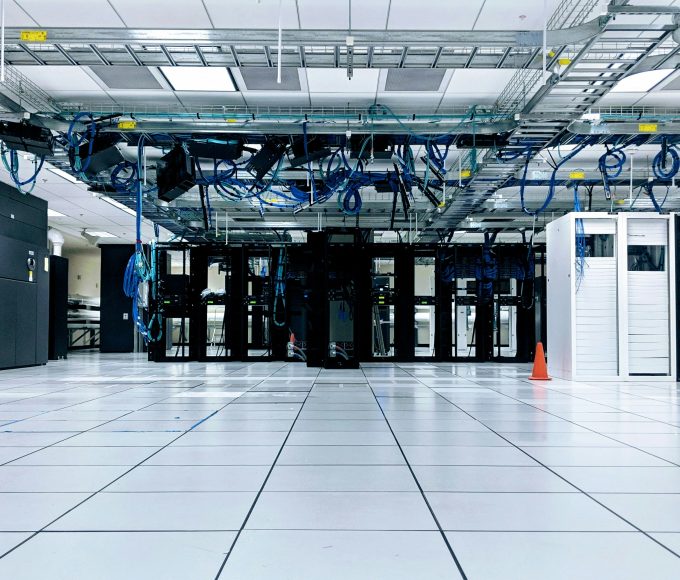
Edge computing infrastructure ranges from small enclosures to modular data centers. At the smallest scale, edge devices might be a single server or appliance installed in a retail store or factory. Mid-scale edge deployments might consist of several racks of equipment installed in a cell tower base station or a regional network hub. Large-scale edge data centers can be purpose-built facilities of 1 to 5 megawatts located in or near population centers.
Telecommunications companies are among the largest edge infrastructure operators, leveraging their existing network of cell towers and central offices to host edge computing equipment. Cloud providers are also building edge infrastructure. AWS Outposts, Azure Stack Edge, and Google Distributed Cloud all place cloud computing resources at customer locations or in edge data centers closer to end users.
Edge computing does not replace cloud computing. The two architectures complement each other. Edge handles time-sensitive, data-intensive processing close to the source. Cloud handles large-scale computation, long-term storage, and workloads that benefit from centralized infrastructure. Most modern applications use both, with edge nodes handling immediate processing and syncing results to the cloud for aggregation, analysis, and archival.
This hybrid model is sometimes called the cloud-to-edge continuum. Data flows from devices to edge nodes to regional data centers to centralized cloud, with processing occurring at whatever tier is most appropriate for the task. The intelligence to route data and processing across these tiers is becoming increasingly automated, with AI-driven orchestration systems determining the optimal placement of workloads in real time.
Edge computing distributes power consumption across many small sites rather than concentrating it in a few large facilities. This creates different energy challenges. Small edge sites rarely have the redundant power and cooling infrastructure of large data centers. They may operate in environments with unreliable power or limited cooling capacity. Maintaining and servicing thousands of remote edge sites is operationally complex compared to managing a few centralized facilities.
However, edge computing can reduce total energy consumption for certain workloads by eliminating the energy cost of transmitting large volumes of data across long distances. Processing video from security cameras at the edge, for example, avoids sending continuous high-definition video streams to a distant cloud data center. Only the relevant metadata or alerts need to be transmitted, dramatically reducing network energy consumption.
Key Takeaway PUE measures how efficiently a data center uses energy. A...
Why Data Centers Use Water Water is one of the most efficient...
Why Grid Connection Is the Bottleneck A data center is only as...
What Redundancy Means in Data Centers Redundancy in a data center means...




Leave a comment