
Data-Driven Energy Analysis
How the world's energy systems actually work
Analysis of power grids, data center energy, and renewable infrastructure. No spin, just data.
View latest analysis
Data-Driven Energy Analysis
Analysis of power grids, data center energy, and renewable infrastructure. No spin, just data.
View latest analysis

 AlexanderFebruary 22, 20262 Mins read
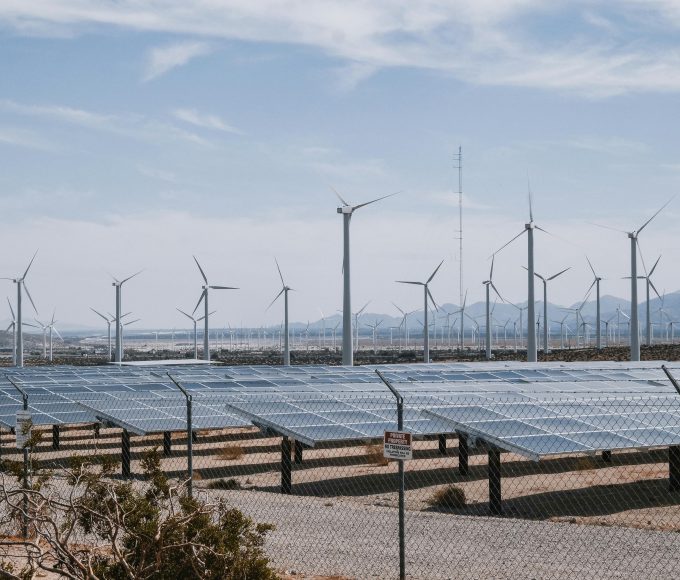
Utility-scale solar refers to large photovoltaic installations, typically 10 megawatts or larger, that generate electricity for sale into the wholesale power market or under long-term power purchase agreements with utilities. These projects are fundamentally different from rooftop solar in scale, technology, and economics. A single utility-scale solar farm might cover 1,000 to 5,000 acres and generate enough electricity to power 50,000 to 250,000 homes.
The United States installed approximately 32 gigawatts of utility-scale solar capacity in 2024, bringing the total to over 130 gigawatts. Solar now accounts for more than half of all new electricity generation capacity added in the country each year, and the pipeline of projects in development exceeds 500 gigawatts.
Developing a utility-scale solar project begins with site selection. Developers look for land with high solar irradiance, proximity to transmission infrastructure, favorable zoning and permitting conditions, and willing landowners. The best solar resources in the United States are in the Southwest, but economic solar development is viable across most of the country thanks to declining panel costs.
Once a site is identified, the developer secures land rights through lease agreements with landowners, typically paying $300 to $2,000 per acre per year depending on the region. Environmental assessments evaluate impacts on wetlands, endangered species, and cultural resources. Local permitting requirements vary widely, with some jurisdictions approving projects in months and others taking years.
Utility-scale solar farms use one of two mounting configurations. Fixed-tilt systems mount panels at a permanent angle, typically facing south at an inclination optimized for the site’s latitude. Single-axis tracking systems mount panels on motorized rails that follow the sun from east to west throughout the day, increasing energy output by 15% to 25% compared to fixed-tilt systems. Tracking systems cost more but generate more revenue, and they have become the dominant configuration for new US projects.
Construction of a 100-megawatt solar farm typically takes 8 to 14 months. The process involves grading the land, driving steel piles to support the racking structure, mounting panels, installing inverters and transformers, and connecting the facility to the grid through a substation. A project of this size might employ 300 to 500 workers during peak construction.
The economics of utility-scale solar have improved dramatically. The levelized cost of energy from new solar installations has fallen below $30 per megawatt-hour in favorable locations, making it the cheapest source of new electricity generation in most of the United States. The federal investment tax credit, currently at 30% under the Inflation Reduction Act, further improves project economics.
Revenue comes primarily from power purchase agreements with utilities or corporate buyers. PPA prices for utility-scale solar have ranged from $20 to $50 per megawatt-hour in recent years, depending on the region and contract structure. Projects in the sunniest locations with the lowest land costs can achieve returns that attract investment capital without subsidies.
As solar penetration increases, grid integration challenges are emerging. Solar generation peaks around midday, which increasingly does not align with peak electricity demand in the early evening. This mismatch, known as the duck curve, creates periods of oversupply that can force solar curtailment, where panels are deliberately turned down or off because the grid cannot absorb their output.
Battery storage is the primary solution. Solar-plus-storage projects, which pair a solar farm with a co-located battery system, can shift generation from midday to the evening peak. These hybrid projects are now the standard configuration for new solar development in markets like California and Texas, where midday prices are frequently low or negative.
The Physics of Photovoltaic Cells Solar panels generate electricity through the photovoltaic...
How Net Metering Works Net metering is a billing arrangement that allows...
What Is a Power Purchase Agreement? A power purchase agreement, or PPA,...
Recent developments in the renewable energy sector have underscored a pivotal transition...



Leave a comment