
Data-Driven Energy Analysis
How the world's energy systems actually work
Analysis of power grids, data center energy, and renewable infrastructure. No spin, just data.
View latest analysis
Data-Driven Energy Analysis
Analysis of power grids, data center energy, and renewable infrastructure. No spin, just data.
View latest analysis

 AlexanderFebruary 9, 20263 Mins read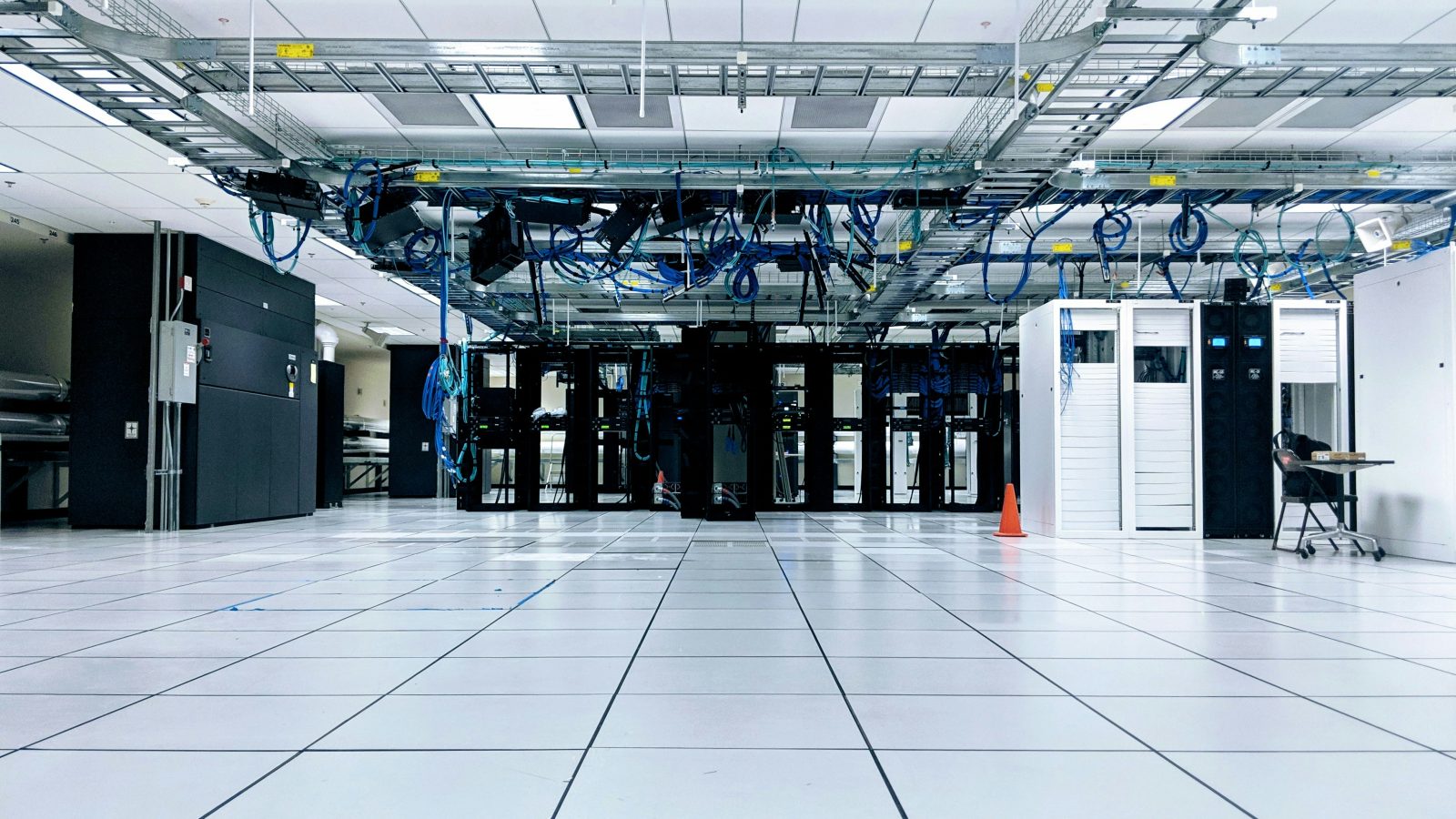
Every watt of electricity consumed by a server is ultimately converted into heat. A data center with 50 megawatts of IT load generates 50 megawatts of heat that must be continuously removed. Cooling systems account for 30 to 40 percent of a data center’s total energy consumption, making them the single largest source of overhead beyond the computing equipment itself. The efficiency and design of cooling systems directly determine a facility’s PUE and operating costs.
The challenge is intensifying. Traditional server racks consumed 5 to 10 kilowatts. Modern AI-optimized racks packed with GPUs can consume 40 to 100 kilowatts or more. This concentration of heat in a small space pushes air-based cooling to its physical limits and is driving the industry toward liquid cooling technologies that can handle higher heat densities more efficiently.
Air cooling has been the dominant approach since the earliest data centers. The basic principle is straightforward: cold air is delivered to the front of server racks, passes through the equipment absorbing heat, and exits as hot air from the rear. This hot air is then captured, cooled, and recirculated.
Computer room air conditioning units, known as CRACs, use refrigerant-based cooling similar to commercial air conditioning. Computer room air handler units, known as CRAHs, use chilled water from a central plant. Both systems push cold air under a raised floor, where it rises through perforated tiles in front of the server racks. Hot-aisle and cold-aisle containment strategies prevent hot and cold air from mixing, improving efficiency.
Air cooling works well for power densities up to approximately 15 to 20 kilowatts per rack. Beyond this threshold, the volume of air required to remove sufficient heat becomes impractical. Fans consume more energy, and the temperature differential between inlet and outlet air narrows, reducing cooling effectiveness. For high-density AI deployments, air cooling alone is insufficient.
Liquid cooling uses water or specialized fluids to remove heat directly from components, bypassing air entirely. There are two primary approaches. Direct-to-chip cooling circulates liquid through cold plates mounted on CPUs and GPUs. The liquid absorbs heat at the chip surface and carries it to a heat exchanger outside the rack or building. This approach can handle power densities exceeding 100 kilowatts per rack while maintaining chip temperatures within safe operating ranges.
Immersion cooling submerges entire servers in tanks of non-conductive dielectric fluid. The fluid absorbs heat from all components simultaneously. In single-phase immersion, the fluid remains liquid and is pumped through a heat exchanger. In two-phase immersion, the fluid boils at the component surface, and the vapor rises to a condenser at the top of the tank. Two-phase systems are more efficient but more complex to engineer and maintain.
Liquid cooling reduces energy consumption for heat removal by 30 to 50 percent compared to air cooling. It also eliminates the need for raised floors, large air handling units, and the associated floor space. The tradeoff is higher upfront cost, more complex plumbing infrastructure, and maintenance procedures that require specialized training.
Free cooling uses outside air or water to cool the data center when ambient temperatures are low enough, reducing or eliminating the need for mechanical refrigeration. In cold climates, outside air can be filtered and brought directly into the data hall for much of the year. In temperate climates, evaporative cooling towers can cool water to temperatures sufficient for the cooling system without running chillers.
The effectiveness of free cooling depends entirely on location. Data centers in Scandinavia, Iceland, or the Pacific Northwest can use free cooling for the vast majority of the year. Facilities in hot, humid climates like Singapore or the southern United States may only achieve free cooling during a few months. This climate dependency is one reason hyperscale operators often choose locations in cooler regions for new construction.
The industry is moving toward a hybrid model where air cooling handles lower-density general computing and liquid cooling handles high-density AI workloads. Many new data center designs include plumbing infrastructure for liquid cooling from the start, even if initial deployments use air cooling. This future-proofing adds cost but avoids the expense of retrofitting liquid cooling later. The transition from air to liquid cooling is one of the most significant shifts in data center design in decades, driven entirely by the power demands of artificial intelligence.
Key Takeaway PUE measures how efficiently a data center uses energy. A...
What Edge Computing Means Edge computing is an architectural approach that moves...
Why Data Centers Use Water Water is one of the most efficient...
Why Grid Connection Is the Bottleneck A data center is only as...



Leave a comment